
A string of outages has recently affected Microsoft and Apple services, banks, the FAA and other infrastructure. The incidents do not share one confirmed cause, but they expose a growing dependence on a small number of highly interconnected platforms.
No evidence of one coordinated attack
Confirmed causes vary: configuration errors, software failures, infrastructure problems and incidents still under investigation. Nothing in the public information reviewed proves that a single coordinated cyberattack connects all of these outages.
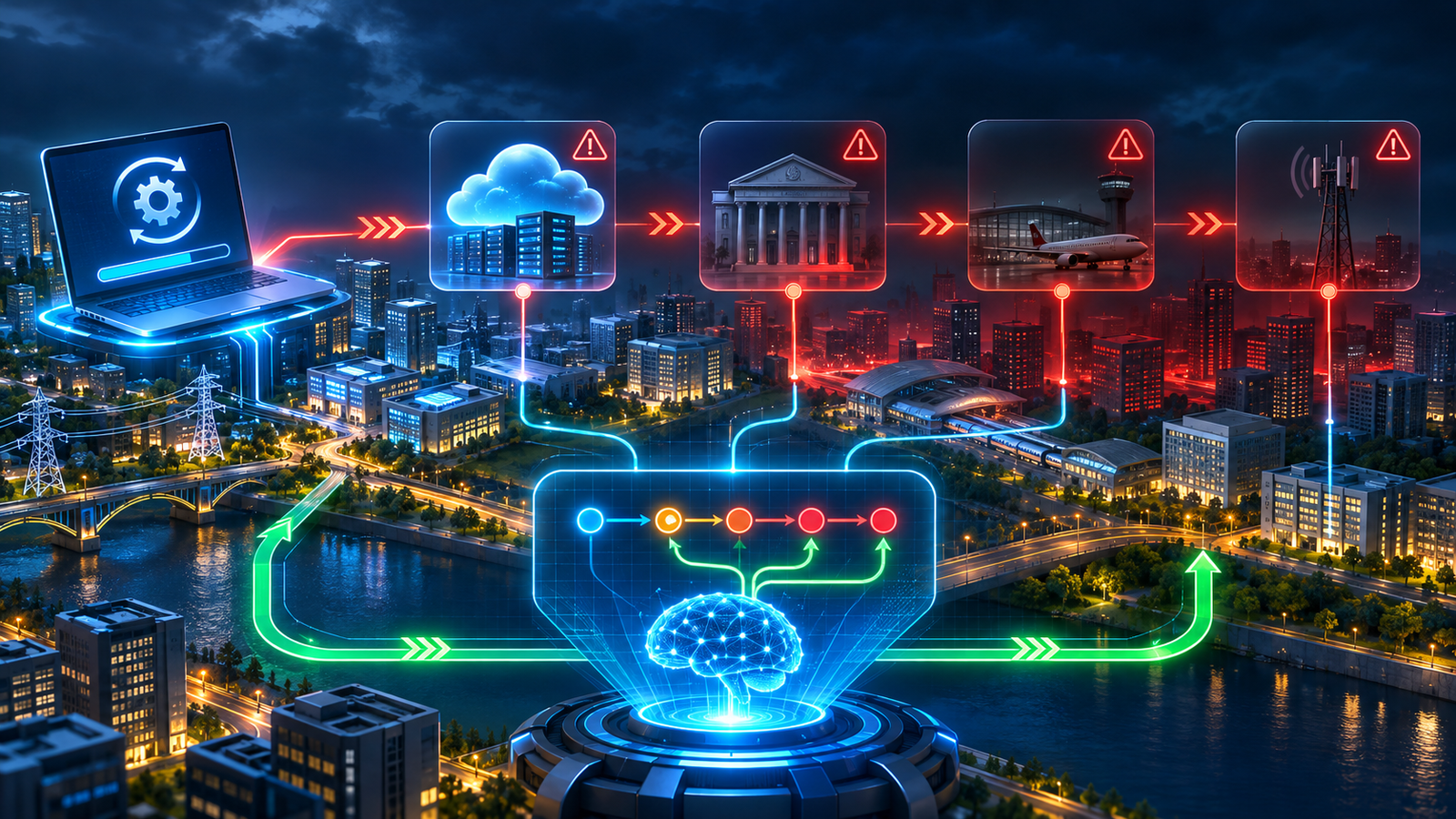
Their timing nevertheless highlights systemic risk. A flawed update, routing mistake or identity-provider failure can disrupt thousands of organizations that share the same dependency.
AI is accelerating patches too
AI tools can help teams find vulnerabilities, analyze logs and produce fixes faster. That speed introduces another risk: an inadequately tested patch can cause its own outage. Microsoft said its incident was not caused by AI systems or agents, so confirmed facts should be separated from broader concerns about automation.
How organizations can reduce risk
- Roll out updates gradually with a tested rollback path.
- Maintain backup access and authentication channels.
- Test continuity plans that do not depend on the same provider.
- Monitor third-party dependencies and service commitments.
- Require human validation for critical changes proposed by AI.
Consumers can also prepare with alternative payment methods, local copies of essential documents and backup communication channels. Digital resilience is no longer only about preventing outages; it is about continuing to operate when they happen.